WATER SQUEEZE: New Plan Targets 20% Cuts as Nevada Faces Tough Choices on Colorado River
By TheNevadaGlobeStaff, May 5, 2026 6:00 am
Nevada, California, and Arizona are floating a new framework to cut Colorado River use by up to 20 percent, a stark signal that the era of easy water in the Southwest is over.
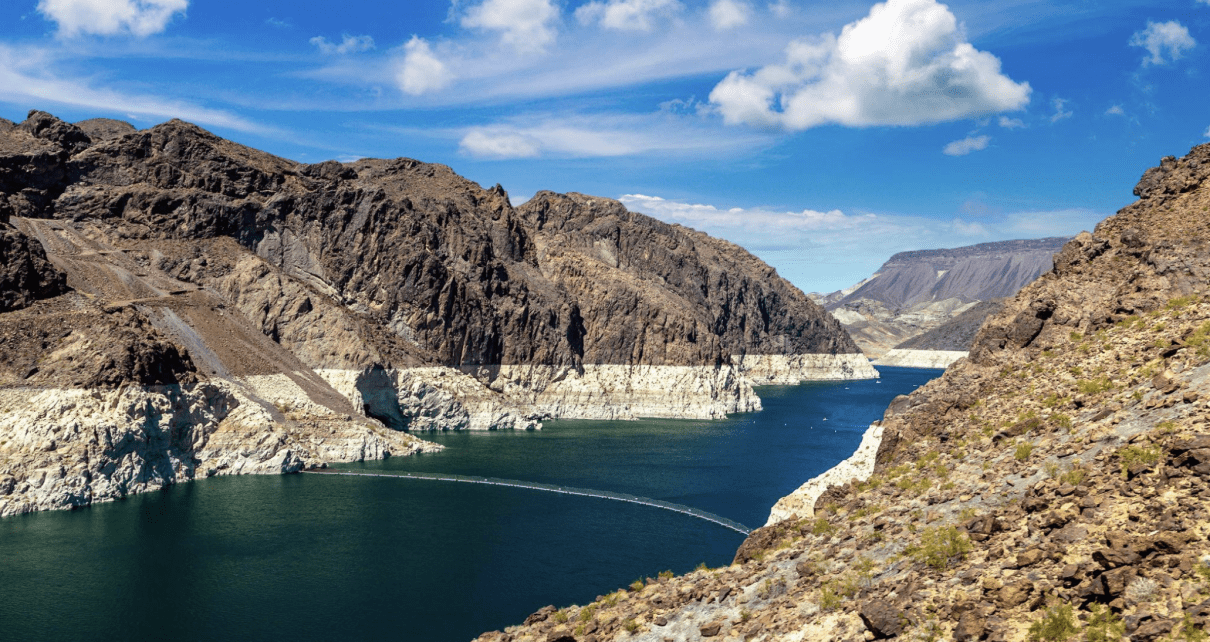
The proposal comes as reservoir levels at Lake Mead and Lake Powell remain under long-term pressure, forcing states to negotiate deeper reductions to keep the system from hitting crisis thresholds. For Nevada, which already uses a relatively small share of the river, the implications are significant.
This is not just a policy tweak. It is a structural shift.
Nevada draws roughly 300,000 acre-feet annually from the Colorado River, most of it flowing through Southern Nevada’s system anchored by Lake Mead. The Southern Nevada Water Authority has long been considered a model for conservation, recycling indoor water and squeezing more efficiency out of every drop.
But even with those gains, a 20 percent regional cut means pressure will increase.
Las Vegas is likely to see tighter conservation rules, especially on outdoor water use. Turf removal mandates, limits on decorative grass, and stricter enforcement of watering schedules could expand. New development may face additional scrutiny tied to long-term water availability. And pricing could become a bigger lever, with higher rates used to curb demand.
In short, growth and water are now directly linked.
That creates a complicated balancing act for Nevada’s economy.
Clark County continues to grow, driven by tourism, construction, and migration. But every new home, hotel, and business depends on reliable water supply. If cuts deepen, policymakers will have to decide how to allocate limited resources between existing users and future expansion.
There is also a political dimension.
Western water policy has always been a mix of state negotiations and federal oversight. As cuts become more severe, tensions between states, environmental groups, and federal agencies are likely to intensify. Nevada’s relatively efficient use gives it some leverage in those discussions, but it does not make the state immune.
The California factor looms here too.
California uses a far larger share of the Colorado River and has historically resisted deeper cuts. Any agreement that holds requires buy-in from all parties. If negotiations stall, the federal government could impose its own reductions, removing flexibility from the states entirely.
For Nevada, that is a risk. This is the Nevada trend many overlook. Water is becoming one of the defining constraints on the state’s future. Not politics in Washington. Not even tourism cycles. Water.
And unlike other issues, there is no quick fix.
The state has already done much of the easy conservation work. What comes next involves harder tradeoffs, including how much growth Nevada can sustain and how aggressively it must limit consumption.
For residents, the impact will be gradual but real. More restrictions on landscaping. Potentially higher bills. Increased focus on conservation compliance. And a growing awareness that the desert has limits, even for a state that has learned to thrive in it.
The proposal is not final, and negotiations will continue. But the direction is clear. Less water. More pressure. And big decisions ahead for Nevada’s future.
Speak Up, Nevada! What’s on Your Mind? Send us your opinion!
Got the inside scoop on something happening in Nevada? Or the country? Do you have thoughts about life in Nevada that are too good to keep to yourself? Whether it’s a hot take on our politics, crime, education, or even the secret to surviving our summers, we’re all ears! Swing them our way at editor@thenevadaglobe.com. Come on, give us the scoop on what makes Nevada tick—or what ticks you off. Let’s make some noise and have some fun with it!


- Nevada Globe – 2026 General Election Recommendations - October 17, 2026
- TAX TRAIL: Benitez-Thompson’s Rural Nevada Bid Revives Votes for Payroll, Business and Mining Taxes - October 16, 2026
- Victim Shot and Killed Resisting Three Suspects in Midday Commercial Robbery on East Flamingo Road - October 16, 2026