Nevada Lawmakers Draft Guardrails on Police License Plate Readers as Privacy Scrutiny Mounts
By TheNevadaGlobeStaff, September 21, 2026 12:39 pm
CARSON CITY, NV — Prompted by escalating civil liberties concerns over unchecked surveillance technologies, Nevada state lawmakers are finalizing draft legislation to establish the state’s first statutory guardrails governing law enforcement Automated License Plate Readers (ALPR).
The legislative effort—advancing through the Nevada Legislature’s Joint Interim Standing Committee on the Judiciary—aims to impose strict statewide data-retention limits, mandatory annual compliance audits, and warrant standards on location-tracking databases ahead of the 84th Legislative Session in Carson City.
+--------------------------------------------------------+
|          NEVADA ALPR SURVEILLANCE REFORM DOSSIER       |
+--------------------------------------------------------+
|  - Sponsoring Body: Joint Interim Judiciary Committee  |
|  - Legislative Target: 2027 Nevada Legislative Session |
|  - Current Legal Status: Zero State Statutes Regulating|
|    ALPR or Flock Safety Network Deployments in Nevada  |
|  - Core Legislative Mandates in Draft Proposal:        |
|      • Standardized 30-Day Data Retention Caps         |
|      • Judicial Warrants for Out-of-State Data Sharing |
|      • Written Agency Policies & Annual State Audits   |
|      • Mandatory Case-Number Justifications on Queries |
|  - Competing Proposal: BDR Filed by Asm. Selena La Rue |
|    Hatch (Backed by ACLU of NV) to Ban ALPR Outright   |
|  - Primary Catalysts: CCSD Police Flock Agreement &    |
|    Metro Deployments via Private Donor Funding         |
+--------------------------------------------------------+
Closing Nevada’s Legal Void on Surveillance Cameras
Unlike 16 other states that have enacted clear statutory limits on automated surveillance cameras, Nevada currently maintains zero laws regulating how public agencies deploy, store, or share data gathered by AI-powered vehicle readers.
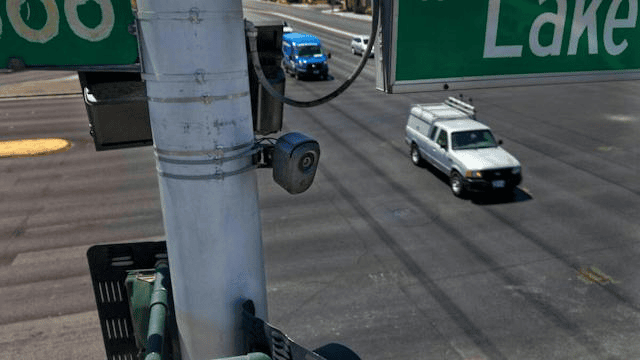
Over recent years, hundreds of cameras operated by vendors such as Flock Safety have been installed across Clark County, Washoe County, and municipal arterial corridors.
While police agencies tout ALPR networks as essential tools for solving hit-and-run fatalities, intercepting stolen vehicles, and locating Amber Alert abduction targets, civil liberty advocates argue the cameras effectively subject law-abiding motorists to warrantless, 24/7 location tracking.
The interim committee’s draft proposal—based on model policies developed by the Legislative Analysis and Public Policy Association—would require any agency utilizing the systems to adopt written use policies, enforce mandatory privacy training, and undergo independent annual compliance audits submitted to the governor, attorney general, and legislature.
School District Agreement and Out-of-State Data Sharing
Scrutiny over license plate tracking intensified following disclosures that the Clark County School District Police Department (CCSDPD) secured administrative access to local Flock camera networks.
The revelation that school officers could query vehicle movements across the valley without judicial oversight sparked sharp backlash from parent organizations and civil rights groups, prompting the district to pause its agreement pending internal review.
A central focus of the draft legislation is restricting interstate data sharing.
Under the proposed rules, Nevada police departments would be prohibited from sharing automated plate scans, travel logs, or search hits with out-of-state law enforcement agencies or federal authorities without a specific judicial warrant—preventing outside jurisdictions from monitoring travel related to reproductive healthcare or other lawful state activities.
+--------------------------------------------------------+
|             THE COMPETING CAPITOL PATHWAYS             |
+--------------------------------------------------------+
|  • Regulatory Framework: Interim Judiciary bill adds   |
|    independent audits, logging rules & retention caps  |
|  • Outright Prohibition: Northern Nevada Democrat      |
|    Selena La Rue Hatch pushes bill to ban ALPR systems |
|  • Law Enforcement Defense: Metro & regional police    |
|    defend tech as vital for violent felony response    |
+--------------------------------------------------------+
The regulatory measure is expected to trigger a significant debate in Carson City.
While the judiciary committee’s compromise proposal has drawn bipartisan interest, Assemblymember Selena La Rue Hatch (D-Reno), backed by the ACLU of Nevada, has filed a competing bill draft request seeking a statewide ban on automated plate reading networks entirely, arguing the technology violates constitutional privacy rights.
“This technology is in direct violation of our basic constitutional rights, is far too easily abused, and it does not match our Nevada values,” La Rue Hatch said. “This is the Silver State, not the Surveillance State.”
Hearings on the competing measures will begin when lawmakers convene for the 2027 session in February.
Source: Nevada Legislature Interim Standing Committee on the Judiciary, The Nevada Independent Government Bureau, ACLU of Nevada Legislative Archives.
© 2026 Nevada Globe. All Rights Reserved.


- Nevada Lawmakers Draft Guardrails on Police License Plate Readers as Privacy Scrutiny Mounts - September 21, 2026
- NWS Warns of Scattered Thunderstorms, Flash Flood Hazards and Gusty Outflows Across Southern Nevada - September 21, 2026
- Aaron Ford’s Big Paramount Mistake - September 21, 2026
RELATED ARTICLES
-

-
September 27, 2022
-