Ninth Circuit Rules Sigal Chattah Was Unlawfully Appointed as Acting U.S. Attorney for Nevada
By TheNevadaGlobeStaff, August 19, 2026 2:21 pm
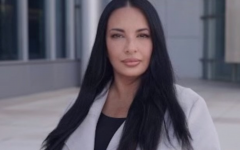
SAN FRANCISCO, CA — A unanimous three-judge panel of the U.S. Court of Appeals for the Ninth Circuit has ruled that the Department of Justice acted unlawfully when it used administrative title maneuvers to keep Sigal Chattah serving as the Acting United States Attorney for the District of Nevada.
The 25-page decision in United States v. Jackson affirmed a lower court order disqualifying Chattah from participating in or supervising federal criminal prosecutions, establishing a critical precedent regarding the limits of executive appointment powers under the Federal Vacancies Reform Act of 1998 (FVRA).
+--------------------------------------------------------+
|          NINTH CIRCUIT CHATTAH APPOINTMENT DOSSIER     |
+--------------------------------------------------------+
|  - Case Caption: United States v. Jackson (No. 25-6470)|
|  - Appellate Court: 9th U.S. Circuit Court of Appeals  |
|  - Authoring Judge: Circuit Judge Eric D. Miller       |
|  - Panel: Judges Sidney Thomas, Eric Miller, Salvador  |
|           Mendoza Jr. (Unanimous 3-0 Decision)         |
|  - Core Holding: Designation as First Assistant after  |
|    vacancy arose violated the FVRA (5 U.S.C. § 3345)   |
|  - Remedy: Disqualification from supervising criminal   |
|    prosecutions affirmed; indictments remain intact    |
+--------------------------------------------------------+
Bypassing the Federal Vacancies Reform Act
The legal challenge originated after former U.S. Attorney Jason Frierson resigned in January 2025. The Attorney General initially appointed Chattah as interim U.S. Attorney on April 1, 2025, under 28 U.S.C. § 546, a statute that strictly caps interim service at 120 days.
Just two days before her 120-day term was set to expire on July 30, 2025, Chattah resigned as interim U.S. Attorney. The Attorney General immediately designated her as First Assistant U.S. Attorney and declared that, by operation of the FVRA (5 U.S.C. § 3345(a)(1)), she automatically succeeded to the role of Acting U.S. Attorney. Concurrently, the Attorney General appointed her as a “Special Attorney” under 28 U.S.C. § 515, delegating to her all functions of the chief federal prosecutor.
In the unanimous opinion authored by Circuit Judge Eric D. Miller, the Ninth Circuit held that the FVRA’s automatic succession rule applies exclusively to an official who was already serving as the first assistant at the exact time the vacancy arose.
“Section 3345(a)(1) does not apply to an official who, like Chattah, was not serving as the first assistant at the time the vacancy arose,” Judge Miller wrote for the court. “The FVRA is ‘the exclusive means for temporarily authorizing an acting official to perform the functions and duties of any office,’ so it prohibits a complete delegation of all of the U.S. Attorney’s powers to a single person.”
+--------------------------------------------------------+
|           STATUTORY INTERPRETATION BREAKDOWN           |
+--------------------------------------------------------+
|  • 5 U.S.C. § 3345(a)(1): Automatic succession only    |
|    applies to first assistants in place prior to vacancy|
|  • 5 U.S.C. § 3347(a): FVRA is the EXCLUSIVE vehicle;  |
|    general DOJ delegation statutes cannot circumvent it|
|  • 2001 OLC Opinion: Ninth Circuit ruled prior DOJ OLC |
|    memo authorizing title shifts was entitled to "no   |
|    weight" under constitutional separation of powers   |
+--------------------------------------------------------+
Criminal Indictments Upheld but Disqualification Affirmed
The appellate panel resolved appeals stemming from criminal defendants who argued that their federal indictments were invalid because Chattah’s name appeared in the signature blocks as “Acting United States Attorney”.
While the Ninth Circuit affirmed Senior U.S. District Judge David G. Campbell’s order disqualifying Chattah from supervising the cases, the panel upheld the validity of the underlying indictments. The court noted that career Assistant U.S. Attorneys derive their authority to sign indictments directly from general prosecutorial powers granted under federal law rather than solely from the U.S. Attorney.
The ruling leaves Chattah able to serve as an Assistant or Special Attorney handling assigned litigation, but strips her of lawful authority to serve as the de facto or acting chief federal prosecutor for the District of Nevada without presidential nomination and Senate confirmation.
Details regarding the court’s legal findings can be reviewed in the published opinion on the Ninth Circuit Court of Appeals, with case analysis available via legal scholarship on The Volokh Conspiracy and reporting from Democracy Docket and California Globe. Additional department updates can be found through the District of Nevada U.S. Attorney’s Office.
Source: U.S. Court of Appeals for the Ninth Circuit (USA v. Jackson, No. 25-6470), U.S. District Court for the District of Nevada.
© 2026 Nevada Globe. All Rights Reserved.


- Las Vegas Tax Preparer Sentenced to 38 Months in Federal Prison in $5 Million IRS Refund Fraud Scheme - October 21, 2026
- Metro Homicide Section Responds After Unresponsive Man Found on El Camino Avenue Dies at Hospital - October 21, 2026
- Metro Police Awarded $300,000 State Grant to Bolster Valley Traffic Safety Enforcement and Impairment Crackdowns - October 21, 2026