
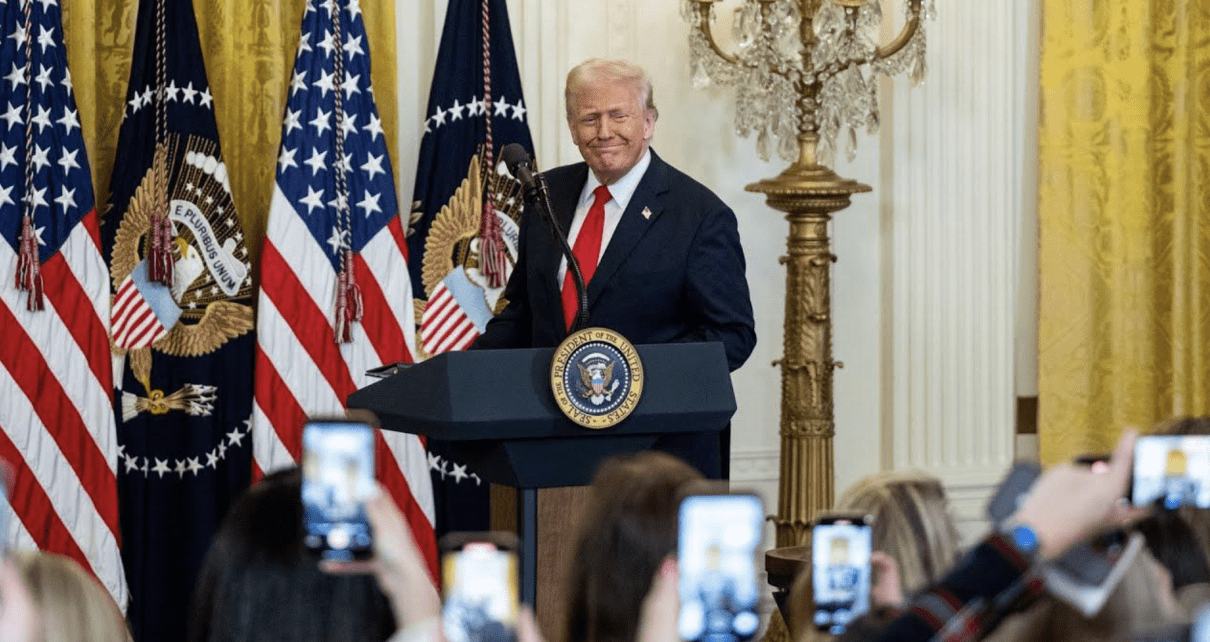
Trump Targets Federal Bureaucracy With New Accountability Reforms
By TheNevadaGlobeStaff, June 5, 2026 6:00 am
President Donald Trump is taking another step toward reshaping the federal workforce, signing an executive action aimed at making government employees more accountable to the American people and easier to remove when they fail to carry out the policies voters elected an administration to implement.
The move revives one of Trump’s longstanding criticisms of Washington: that unelected bureaucrats wield enormous influence over government policy while facing little accountability when they obstruct elected leadership.
The executive action implements what the administration calls “Schedule Policy/Career,” a new employment classification designed for federal employees who play significant roles in developing, influencing, or implementing public policy. According to the White House, the goal is to ensure that individuals occupying positions of substantial policy influence are responsive to elected leadership and accountable for their performance.
The administration argues that for too long, a permanent bureaucracy has operated with limited oversight, often resisting the policies supported by voters and slowing the implementation of presidential priorities regardless of which party occupies the White House.
Supporters of the reform say it is a common-sense effort to bring accountability to a federal workforce that has grown increasingly insulated from consequences.
The White House points to repeated examples over the last several decades where senior career officials have openly opposed administrations they served under, leaked sensitive information, delayed implementation of policy decisions, or used bureaucratic processes to undermine elected leadership. Administration officials argue that no private-sector organization could function effectively if senior employees were allowed to actively resist the directives of management without consequence.
For conservatives, the issue goes beyond personnel policy.
It is about who governs the country.
Republicans have increasingly argued that Washington suffers from a growing democratic deficit in which voters elect leaders to pursue a particular agenda, only to have those priorities slowed, diluted, or blocked by career bureaucrats who never face voters themselves.
Trump’s reform seeks to change that dynamic by giving administrations greater flexibility to remove employees whose positions involve significant policy responsibilities while preserving protections for workers performing non-political civil service functions.
The White House framed the move as part of a broader effort to make government more responsive, efficient, and accountable to taxpayers.
Administration officials argue that Americans expect federal employees to implement laws and policies, not act as independent political actors. They contend that accountability standards common throughout the private sector should not disappear simply because an employee works for the federal government.
The reform is already generating strong reactions.
Supporters view it as a long-overdue correction to a bureaucracy that has become too powerful and too disconnected from the people it serves. Critics argue the changes could politicize portions of the civil service and weaken traditional protections for government employees.
The debate reflects a larger ideological divide about the role of government itself.
Republicans increasingly argue that Washington has become bloated, unaccountable, and resistant to change. Democrats generally contend that career civil servants provide continuity, expertise, and stability that protect government functions from excessive political influence.
For the Trump administration, however, the issue is straightforward.
The White House argues that elections have consequences and that presidents should be able to expect senior policy officials to faithfully carry out the agenda voters elected them to implement.
The executive action also fits within Trump’s broader effort to reform the federal government. Since returning to office, the administration has focused heavily on reducing bureaucracy, streamlining regulations, rooting out fraud, improving government efficiency, and increasing accountability across federal agencies.
Republicans see those efforts as part of a larger promise to “drain the swamp” and return power from Washington institutions back to the American people.
Whether supporters call it accountability or critics call it controversial, the administration’s message is clear:
Federal employees work for the American people, not the other way around.
And the White House believes government should operate like it.
Speak Up, Nevada! What’s on Your Mind? Send us your opinion!
Got the inside scoop on something happening in Nevada? Or the country? Do you have thoughts about life in Nevada that are too good to keep to yourself? Whether it’s a hot take on our politics, crime, education, or even the secret to surviving our summers, we’re all ears! Swing them our way at editor@thenevadaglobe.com. Come on, give us the scoop on what makes Nevada tick—or what ticks you off. Let’s make some noise and have some fun with it!


- Las Vegas City Council Approves Master Plan to Plant 60,000 Shade Trees to Combat Extreme Urban Heat Islands - October 7, 2026
- Durango Casino & Resort Shakes Up “Eat Your Heart Out” Food Hall Lineup; Closes Three Tenants Ahead of North Expansion - October 7, 2026
- Pedestrian Struck on South Jones Boulevard Dies at UMC Trauma as Las Vegas Records 93rd Traffic Death of 2026 - October 7, 2026
RELATED ARTICLES
-
 January 18, 2026
 -
-