
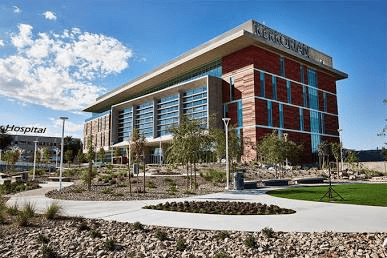
UNLV Kirk Kerkorian School of Medicine.. Source: University of Nevada, Las Vegas
Las Vegas Pours Millions into Medical District Expansion, but Doctor Residency Bottleneck Threatens Healthcare Boom
By TheNevadaGlobeStaff, October 5, 2026 10:30 am
LAS VEGAS, NV — Concrete, steel, and clinical research facilities continue transforming the skyline along Shadow Lane, but Southern Nevada’s multi-million-dollar bid to become a world-class healthcare destination faces an escalating structural hurdle: an acute deficit of graduate medical education (GME) residency slots.
While the City of Las Vegas, Clark County, and private developers pour capital into the Las Vegas Medical District (LVMD)—expanding University Medical Center (UMC) facilities and the Kirk Kerkorian School of Medicine at UNLV—healthcare leaders warn that state-of-the-art buildings cannot overcome Nevada’s chronic shortage of doctors without an influx of accredited training positions.
An investigation and policy analysis published by the Las Vegas Sun reveals that despite graduating larger classes of homegrown medical students, Nevada continues exporting its top medical talent to neighboring states due to an outdated federal cap on residency funding that has left the state ranking near the bottom nationwide in active physicians per capita.
+--------------------------------------------------------+
|      LAS VEGAS MEDICAL DISTRICT & RESIDENCY DOSSIER    |
+--------------------------------------------------------+
|  - Footprint: Las Vegas Medical District (LVMD)        |
|    (674 Acres Centered Along Shadow Lane Corridor)     |
|  - Anchor Entities: Kirk Kerkorian School of Medicine  |
|    at UNLV, University Medical Center (UMC), Valley    |
|    Hospital Medical Center & Cleveland Clinic Lou Ruvo |
|  - Capital Investment: $100M+ in Recent Clinical &     |
|    Research Facilities, Ambulatory Surgical Centers    |
|  - Core Bottleneck: Graduate Medical Education (GME)   |
|    Residency & Fellowship Training Deficit             |
|  - Federal Formula Disparity: CMS Residency Caps       |
|    Frozen Since the Balanced Budget Act of 1997        |
|  - State Comparison: Nevada Has ~403 Federally Funded  |
|    Slots; California Holds 9,000+, New York Has 17,000+|
|  - Retention Dynamic: ~75% of Doctors Who Complete     |
|    Both Med School & Residency in Nevada Stay to       |
|    Practice; Over 55% Currently Leave Due to No Slots  |
|  - Legislative Proposal: State Matching Funds for GME  |
|    Ahead of 2027 Nevada Biennial Legislative Session   |
+--------------------------------------------------------+
Bricks and Mortar vs. Clinical Workforce
The 674-acre Las Vegas Medical District was master-planned by the City of Las Vegas to anchor the diversification of Southern Nevada’s economy, moving the region beyond its historical dependence on hospitality and gaming.
The centerpiece—UNLV’s five-story, $125 million Medical Education Building—now anchors modern biotechnology laboratories, simulation clinics, and administrative offices surrounded by newly built outpatient plazas.
Yet inside those clinical towers, deans and hospital administrators confront a stark mathematical reality: medical school graduates cannot legally practice medicine independently without completing three to seven years of residency training.
“We are building world-class infrastructure, but infrastructure doesn’t treat patients—physicians do,” said healthcare workforce analysts with UNLV Medicine. “If a bright student born and raised in Las Vegas completes medical school here, but there is no residency slot for them in pediatrics, cardiology, or general surgery, they are forced to pack their bags for California, Texas, or Arizona. And history proves that wherever doctors finish their residency, that is where they build their lives, set down roots, and practice.”
According to graduate tracking data from the Nevada Health Workforce Research Center, while more than 70% of physicians who complete both undergraduate medical education and residency in Nevada remain in the state to practice, that retention rate plummets when residents are forced to leave the Silver State to match elsewhere.
The 1997 Federal Freeze and State Appropriations
The primary bottleneck traces back to the federal Balanced Budget Act of 1997, which froze the number of Medicare-funded residency slots allocated to hospitals across the country.
In 1997, Southern Nevada was a fraction of its current size, leaving Nevada with approximately 403 federally supported residency positions. By contrast, older metropolitan states locked in thousands of slots—California retains over 9,000 positions, while New York maintains more than 17,000.
+--------------------------------------------------------+
|             REFORM STRATEGY & STATUTORY PUSH           |
+--------------------------------------------------------+
|  • Congressional Advocacy: Bipartisan federal bills to |
|    redistribute unused CMS residency slots to fast-    |
|    growing Sunbelt states like Nevada                  |
|  • State General Fund Model: Emulating Texas and       |
|    Florida by directly appropriating state revenue to  |
|    fund GME slots at public hospital networks          |
|  • Specialty Gaps: Critical deficits remain in child   |
|    psychiatry, rheumatology, and orthopedic trauma     |
+--------------------------------------------------------+
While Nevada’s congressional delegation continues lobbying the Centers for Medicare & Medicaid Services (CMS) for an equitable reallocation, medical leaders are turning their focus to Carson City.
Ahead of the upcoming 2027 Nevada Legislative Session, healthcare leaders and the UNLV School of Medicine are advocating for a dedicated state-funded GME appropriation, requesting $10 million to $20 million per biennium to create state-funded residency pipelines independent of federal freezes.
Hospital systems, including UMC, are also expanding private philanthropic and clinical revenue partnerships to fund specialized fellowship programs in emergency trauma, pediatric care, and internal medicine.
Without rapid expansion in these postgraduate training slots, officials caution that the Las Vegas Medical District’s architectural footprint will outpace the medical workforce needed to care for Southern Nevada’s aging and expanding population.
Source: City of Las Vegas Economic and Urban Development Department, Kirk Kerkorian School of Medicine at UNLV Workforce Surveys, Las Vegas Sun Healthcare Reporting, Nevada Health Workforce Research Center.
© 2026 Nevada Globe. All Rights Reserved.


- Former Virginia Gov. Jim Gilmore Joins Lombardo in Las Vegas to Champion Federal Tax Credit Scholarships - October 24, 2026
- Clark County Firefighters Contain Pre-Dawn Battery Blaze Across from Harmon Elementary School - October 24, 2026
- Clark County Warns Tourists Tipping Strip Costumed Characters Is Not Mandatory After Aggressive Solicitation Brawl - October 24, 2026
RELATED ARTICLES
-
 November 7, 2022
 -
-
September 7, 2022